

What separates exceptional physiotherapists from average ones isn’t the number of techniques they know, it’s how they think.
The critical choice every physiotherapist makes
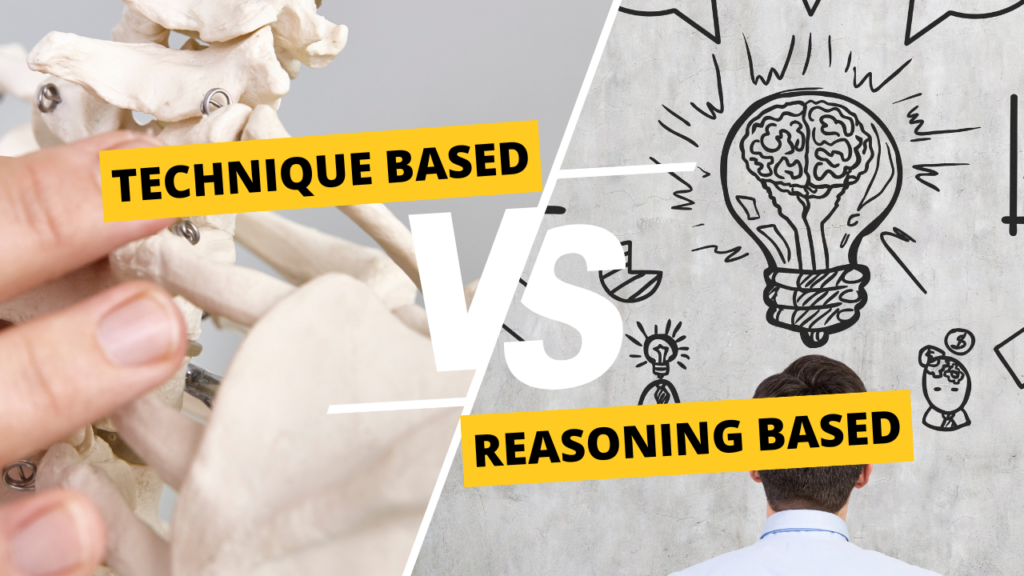
Every physiotherapist faces a fundamental choice in how they practice: chase the latest trendy technique or develop deep clinical reasoning. This distinction determines whether you become a trusted clinical expert or remain a skilled technician applying tools without true understanding.
Technique-driven practice accumulates methods, manual therapy certifications, dry needling courses, the latest taping approaches, trendy modalities. The collection grows impressive, but something crucial is missing.
Reasoning-driven practice starts with a different question: “What is actually happening with this patient, and what will help them most?” Everything flows from there.
The difference? One creates technicians who know how to do many things. The other creates clinicians who understand when, why, and for whom interventions work.
The technique trap
Walk into any physiotherapy conference and you’ll encounter an overwhelming barrage of “revolutionary” techniques and “game-changing” approaches. The promise is seductive: master this method, and patient outcomes will soar.
Yet here’s the uncomfortable truth: a practitioner with dozens of techniques but weak reasoning defaults to their favorite tool rather than the most appropriate intervention. When all you have is a hammer, everything looks like a nail.
You might treat every shoulder pain as rotator cuff tendinopathy or every back pain as muscle strain, not because that’s the accurate diagnosis, but because that’s what your preferred technique addresses.

What reasoning-driven practice actually looks like
when clinical reasoning guides your practice, everything changes:
Assessment becomes investigative. You’re not running through a memorized checklist you’re constructing and testing hypotheses based on the patient’s unique presentation.
Diagnosis becomes precise. You develop nuanced understanding of underlying mechanisms, contributing factors, and prognostic indicators instead of applying generic labels.
Intervention becomes strategic. Treatment selection flows logically from your reasoning, with clear rationales for why you’re choosing specific approaches.
Outcomes become predictable. Sound reasoning produces accurate expectations about patient progress, allowing you to adjust course when results don’t match predictions.

How to Build Exceptional Clinical Reasoning
Excellence in clinical reasoning doesn’t emerge from weekend courses; it’s forged through deliberate commitment to specific practices.
1. Seek Rich Clinical Environments
Work in hospitals or clinics where you collaborate closely with physicians across multiple specialties. This immersion is transformative:
- You witness how expert diagnosticians think through complex cases.
- You encounter rare presentations that textbooks describe but most practitioners never see.
- You learn when to treat independently and when medical collaboration is essential
- You develop humility from seeing cases that don’t fit your mental models
Seek positions that challenge you, not those that allow comfortable repetition of familiar cases.
2. Prioritize Volume and Variety
There’s no substitute for seeing hundreds, then thousands of patients. Clinical reasoning is pattern recognition informed by deep knowledge, patterns only emerge through repeated exposure. But you need a variety:
- Acute and chronic presentations.
- Young and elderly patients.
- Simple and complex cases.
- Musculoskeletal and neurological conditions.
- Patients who respond quickly and those who plateau.
Each patient is a learning opportunity if you treat them as one.
3. Read With Purpose and Depth
Clinical reasoning requires intellectual practice, read extensively and critically. Move beyond technique manuals. Focus on:
- Foundational sciences: Deep understanding of anatomy, biomechanics, neurophysiology, and pain science allows you to reason from first principles.
- Diagnostic reasoning literature: Study how expert clinicians think
Systematic reviews and guidelines: Understand what works, for whom, and when - Adjacent disciplines: Reading orthopedic surgery, sports medicine, and neurology literature expands your thinking
Ask “why?” relentlessly. Don’t just accept that a treatment works, understand the mechanisms, evidence quality, and limitations.
4. Cultivate Reflective Practice
Experience alone doesn’t create expertise, reflected experience does. After challenging encounters, analyze:
- What hypotheses did I generate?
- What evidence supported or contradicted them?
- What did I miss initially?
- What worked and what didn’t?
- What would I do differently next time?
Your most valuable learning comes from cases where your reasoning was wrong or interventions didn’t produce expected results. These aren’t failures, they are masterclasses.



When Reasoning Meets Technique: The Transformation
Here’s where excellence emerges: strong clinical reasoning combined with appropriate technical skill creates truly exceptional practitioners.
Consider a patient with shoulder pain.
The technique-driven therapist immediately deploys their favorite intervention, perhaps the manual therapy from last month’s course or the exercise protocol they use for “all shoulder patients.”
The reasoning-driven therapist conducts thorough examination, generates hypotheses about underlying mechanisms, rotator cuff? capsular restriction? neurogenic pain? movement dysfunction? tests those hypotheses, then selects interventions precisely matched to identified problems.
The crucial point: the reasoning-driven therapist still needs technical skills. The difference is that technique becomes the servant of reasoning, not the master.
You know which tool to select because your diagnostic thinking identified the specific problem. You understand the mechanism by which your chosen technique should work.
You can predict outcomes and recognize when something isn’t working. You can articulate clear rationales to patients, physicians, and insurers.
The Professional Impact

This shift doesn’t just improve patient outcomes, it fundamentally elevates your professional standing.
- Clinical confidence: Your reasoning process remains reliable even when encountering unfamiliar presentations.
- Professional respect: Physicians and colleagues recognize clinical sophistication when you discuss cases with diagnostic precision and evidence-based rationales.
- Career advancement: Healthcare systems value practitioners who handle complex cases and contribute to genuine multidisciplinary collaboration.
- Practice satisfaction: Solving clinical puzzles and seeing your reasoning validated by outcomes remains intellectually engaging throughout your career.
The Commitment Requirement
For students and new graduates: Seek positions that will challenge your clinical reasoning, even if they demand more than comfortable alternatives. Your first five years are your reasoning apprenticeship and invest them wisely.
For experienced practitioners: Honestly assess whether you’ve become complacent, applying the same approaches without genuine diagnostic thought. Recommit to reading, reflection, and reasoning.
For educators: Emphasize reasoning over technique. Model expert thought processes. Create environments where students must defend clinical decisions, not just perform techniques correctly.
The Bottom Line
The techniques will always be there. New ones will emerge, trends will come and go. But the ability to think critically, reason clinically, and solve complex problems that’s timeless.
Every patient deserves a physiotherapist who thinks deeply about their unique presentation rather than applying cookie-cutter protocols. Every patient deserves a clinician who can explain not just what they’re doing, but why it’s the right approach for that individual at that moment.
Be that clinician.
Not the one with the most certifications on the wall, but the one with the sharpest mind in the clinic. Not the one who knows the most techniques, but the one who knows when each technique is truly indicated.
The profession needs this commitment. More importantly, your patients need it.
Your answer to whether you’ll develop into a reasoning-driven practitioner will define your career, your impact, and your legacy in this profession.
Background: The topic discussed in this article draws reference from a post shared by Dr. MR Zulfi on LinkedIn.
Start your journey with expert physiotherapists at Physio Active.