

It’s one of the most common questions heard in a physiotherapy clinic, asked in waiting rooms, texted to therapists at odd hours, and debated in every household that’s ever dealt with a sprain or a sore back.
“Should I put ice on it or apply heat to it?”
And the answer most people get? “Just try both and see what feels better.”
That’s not good enough. Because using the wrong one at the wrong time doesn’t just fail to help, it can actively make things worse.
The Short Answer (Before We Get Into the Science)
Cold pack – when there’s a fresh injury, swelling, or sharp sudden pain.
Hot pack – when the pain is old, the muscles are stiff, and there’s no active swelling.
But understanding why matters more than memorizing the rule. Because once you understand what each one actually does to your body, you’ll never have to guess again.
What Cold Actually Does to Your Body
Ice isn’t just numbing. It’s doing two very specific things under the skin.
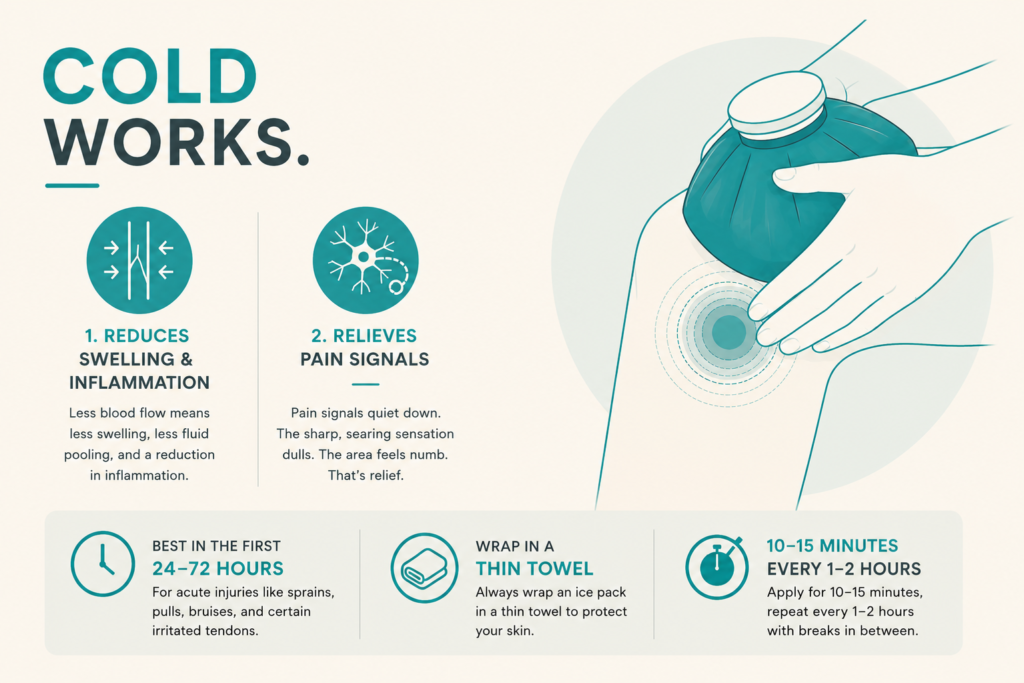
First, it causes Vasoconstriction – the blood vessels in that area narrow. Less blood flows through. And with less blood flow comes less swelling, less fluid pooling and a meaningful reduction in inflammation. That’s not just comfort. That’s tissue protection.
Second, it slows down nerve conduction. The pain signals your nerves are frantically firing and starts to quiet down. The sharp, searing sensation dulls. The area feels numb. That’s the relief you feel within minutes of applying ice – not because the injury healed, but because the nervous system temporarily backed off.
This is exactly what you need in the first 24 to 72 hours after an acute injury. A twisted ankle. A muscle pull. A fresh bruise from impact. Anything where the body is in its immediate inflammatory response – that hot, swollen, throbbing phase that arrives right after damage occurs.
Cold is also useful in certain tendinopathies where the tendon is irritated and reactive. Not every tendon issue calls for ice, but when there’s clear local irritation, reducing that inflammatory load helps.
One thing worth remembering: always wrap an ice pack in a thin towel before applying it. Direct ice on skin causes ice burns – a problem entirely of our own making. Ten to fifteen minutes per application, repeated every one to two hours, with skin breaks in between.
That’s the protocol. Not twenty minutes of ice left on because it felt good.
The Cold Pack Therapy
What Heat Actually Does to Your Body
Heat works in the opposite direction and that’s precisely the point.
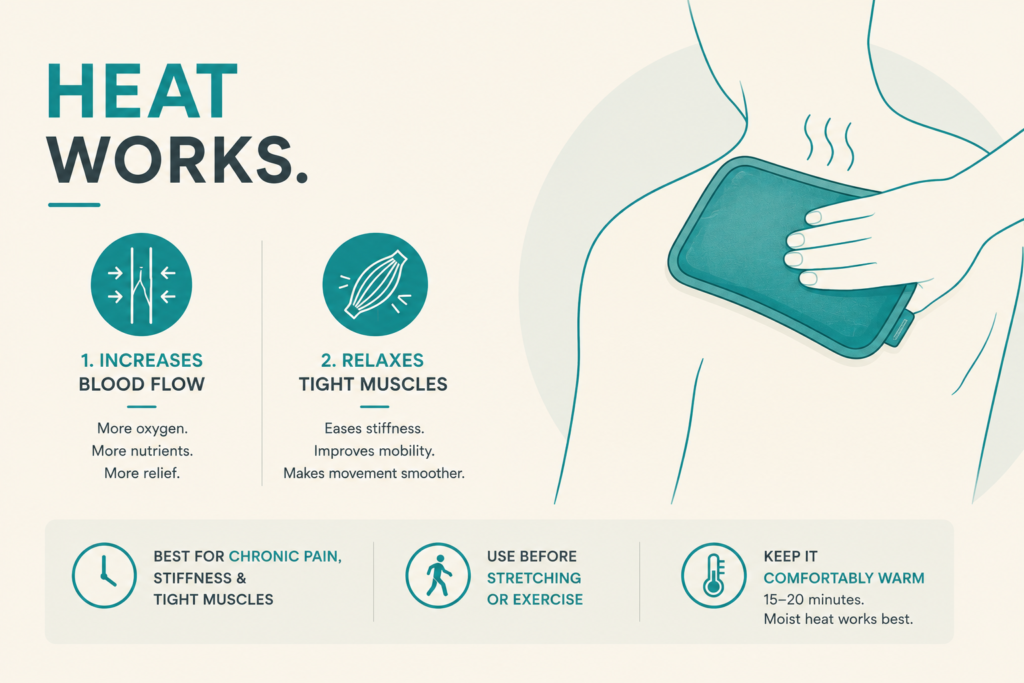
Vasodilation is the mechanism: blood vessels widen, blood flow increases and the target area gets a surge of oxygen and nutrients. For muscles that have been tight, guarded, or stuck in spasm for days or weeks – that increased circulation is deeply relieving. The tissue softens. The stiffness eases. Movement becomes less of a battle.
Heat also raises local metabolic activity. Tissues become more pliable. Muscle fibers let go of that protective contraction they’ve been holding onto. It’s the difference between trying to stretch cold toffee versus warm toffee – the biology is essentially the same.
This is why heat belongs in chronic situations. Persistent lower back pain. Neck stiffness from months of desk work. Arthritis. Old muscle injuries that have healed but left behind tightness. Conditions where the inflammation has already settled and what remains is restriction, discomfort, and reduced mobility.
Heat before stretching or exercise is also underutilized. Warming up muscles before asking them to move reduces resistance, makes movement more comfortable and prepares tissue for load. A warm pack on a chronically stiff area before a mobility session is often more effective than any manual technique applied cold.
The caution here is important though: heat and active swelling is a bad combination. If the area is still visibly swollen, red, or warm to the touch – heat will increase blood flow to an area that’s already flooded. Inflammation gets worse, not better. The rule is simple – if it’s still swollen, reach for the cold pack.
Keep heat at a comfortable warm level, never hot enough to burn. Fifteen to twenty minutes is sufficient. Moist heat – a damp warm towel or a moist heat pack – tends to penetrate more comfortably than dry heat for most people.
The Hot Pack therapy
The Mistake People Keep Making
Reaching for heat on a fresh injury because it feels soothing.
It’s understandable. Heat is comforting. A warm pack on a freshly twisted ankle feels good at the moment, the same way warming a swollen joint feels instinctively right.
But what’s happening underneath is inflammation being amplified. Blood flow rushed to an area already overwhelmed with it. Swelling increases. The body’s inflammatory response, which was doing its job, getting turbocharged by external heat.
The outcome? More pain. More swelling. Slower recovery.
Cold feels harsh on a fresh injury. It’s uncomfortable to apply, and the instinct is to pull away. But that discomfort is doing something useful. The warmth that feels good is doing something harmful. Sometimes the right treatment and the comfortable treatment are not the same thing.
When Neither Is Enough
Here’s what’s worth saying clearly: ice packs and hot packs are supportive tools. They help manage symptoms, improve comfort, and create better conditions for healing. They are not treatments in themselves.
Persistent pain, whether new or old, that does not subsides or go away with home management deserves professional attention. Something chronic that keeps coming back despite heat and rest is telling you something. A fresh injury that stays swollen, painful or limited in movement beyond the first few days needs to be assessed. All of this is enough for a professional consultant.
Orthopaedic v/s Physiotherapist conundrum
Many people are unsure whom to consult first. If the pain follows a fall, accident, suspected fracture, dislocation, severe swelling, deformity or an inability to bear weight, an orthopedic specialist should assess the injury to rule out structural damage.
However, if the problem is related to muscle, ligament, tendon, joint stiffness, recurring pain or movement limitations without signs of a serious injury, a physiotherapist is often the right first point of contact. A seasoned Physiotherapist assesses the root cause of pain, restores movement and guides recovery through evidence-based rehabilitation. When needed, they also work closely with orthopedic specialists, ensuring you receive the right care at the right time.
This naturally reinforces your core message: heat and ice help manage symptoms, but persistent pain needs the right professional assessment, not just another hot or cold pack.
Cold and heat are useful. But they’re the starting point, not the solution.
The Simple Version to Remember
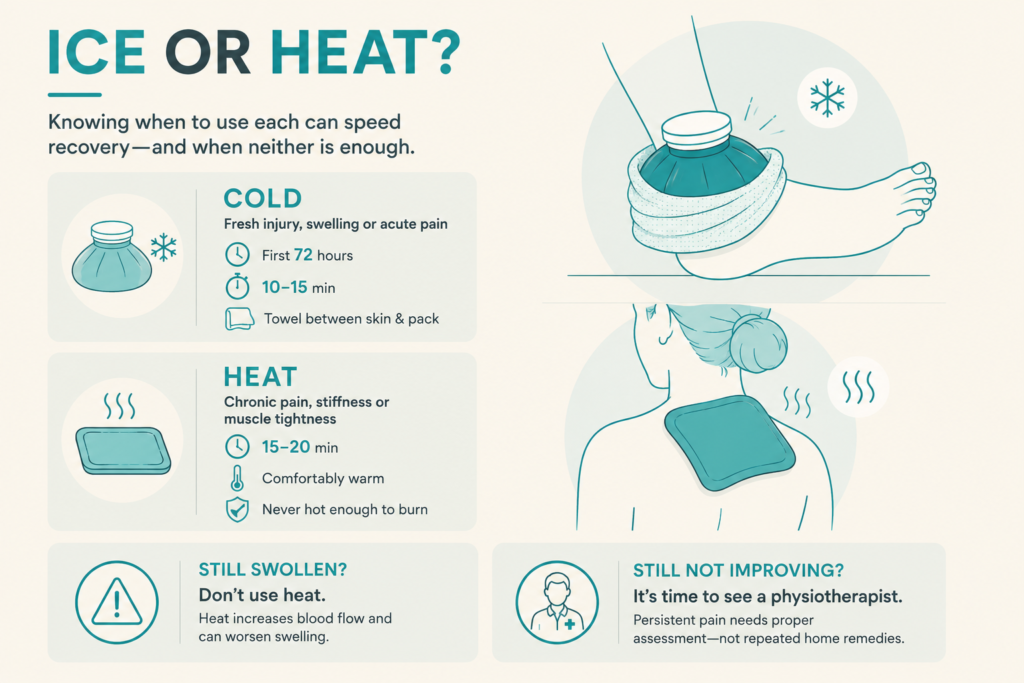
Fresh injury, swelling, acute pain → Cold. First 72 hours, ten to fifteen minutes at a time, towel between skin and pack.
Chronic pain, stiffness, muscle tightness, no swelling → Heat. Fifteen to twenty minutes, comfortably warm, not burning.
Swelling still present → Never heat, regardless of how old the injury feels.
Not improving with either → Time to see a physiotherapist.
Still unsure which one your situation calls for? The safest starting point is always cold for anything new and heat for anything old – and when in doubt, book a consultation. A five-minute assessment can save weeks of managing the wrong thing.
This clinical perspective is inspired by the insights shared by Dr. M R Zulfi on LinkedIn. For more detailed medical discussions, you can view the original professional thread here.
Reach out to us to schedule a session:
WhatsApp / Call : 9971879090
Email: info@physioactiveindia.com
In case you need personal consultation, feel free to book a session with us today
Schedule the session from our website


Blog by: Physio Active content team